

Async and Await in .NET: Practical C# Guide

Async and await in .NET help developers build applications that remain responsive while waiting for work such as database calls, HTTP requests, file operations, or other I/O tasks. Instead of blocking a thread until an operation finishes, asynchronous…
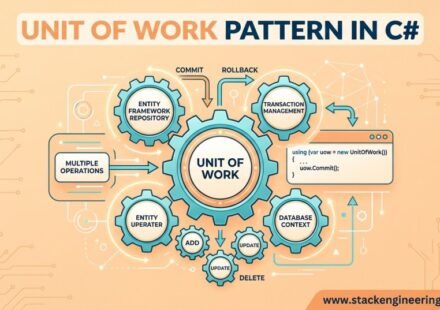
Unit of Work Pattern in C#: Complete Guide with Real-World Example
The Unit of Work Pattern is a software design pattern used to coordinate multiple database operations as one logical business transaction. It is especially useful when an application performs several related inserts, updates, or deletes and all of them…
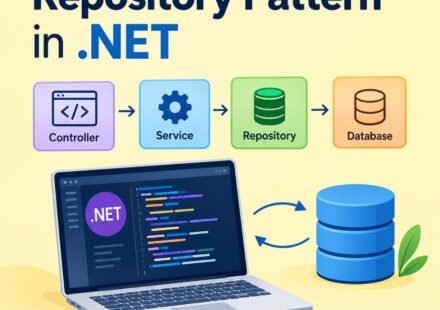
Repository Pattern in .NET: Complete Developer Guide
Repository Pattern in .NET is a popular architectural pattern used to separate application or business logic from data-access code. Instead of allowing controllers and services to communicate directly with Entity Framework Core, ADO.NET, or another…
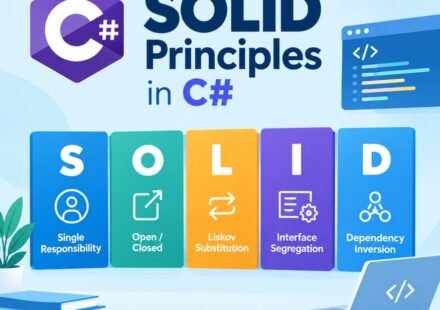
SOLID Principles in C#: A Practical Guide with Real-World Examples
Writing code that works is only the first step in software development. As an application grows, developers must also make sure that the code remains easy to understand, test, modify, and extend. This becomes especially important in enterprise C# and…
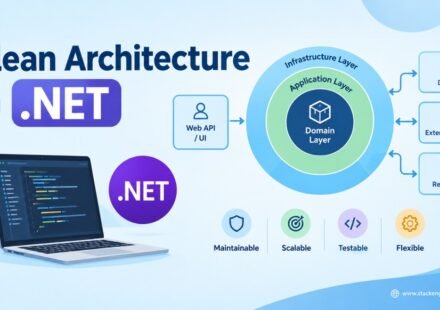
Clean Architecture in .NET: A Practical Guide for Developers
Clean Architecture in .NET is a practical approach for organizing applications so that business logic remains independent from databases, frameworks, external services, and user-interface concerns. As a .NET application grows, placing controllers,…
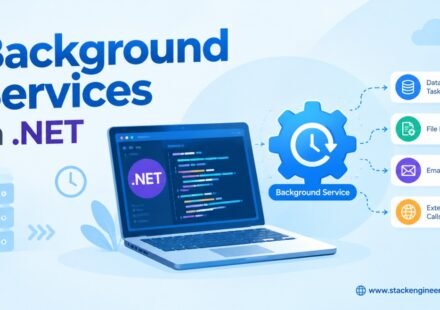
Background Services in .NET: Hosted Services, Workers, Scheduling & Best Practices
Background Services in .NET are an important part of modern application development when a task needs to run independently of an HTTP request. Instead of making a user wait while an application sends emails, processes files, generates reports,…