

ASP.NET Core is one of the most discussed technologies among beginners who want to start a career in web or backend development. In today’s fast-evolving tech world, developers need performance, scalability, and cloud integration more than ever. Therefore, this framework has become a powerful and modern solution.
ASP.NET Core tutorial content is highly searched by developers who want to build scalable web applications and RESTful APIs using modern backend technologies. In addition, keywords like .NET Core 2026, ASP.NET Core Web API, and microservices architecture continue to trend as businesses shift toward cloud-based solutions. Because of its performance and cross-platform support, developers prefer this framework for enterprise applications, startup projects, and high-performance backend systems.
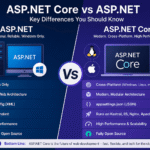
ASP.NET Core is a modern, open-source, cross-platform framework developed by Microsoft that allows developers to build fast, scalable web applications and APIs. It supports Windows, Linux, and macOS, making it a preferred choice for cloud-based and enterprise-level development in 2026.
Understanding the Basics
ASP.NET Core is an open-source, cross-platform web framework that Microsoft developed. Developers use it to build modern web applications, RESTful APIs, and cloud-based solutions. Unlike the traditional ASP.NET framework, it runs on Windows, Linux, and macOS. As a result, it offers high flexibility and a better developer experience.
In simple terms, it is a high-performance framework that helps developers build fast, secure, and scalable web applications. Moreover, it plays a key role in backend development and API creation.
Why It Matters Today
In 2026, software development focuses heavily on cloud-native applications, microservices architecture, and API-first development. Therefore, this framework fits perfectly into modern ecosystems.
Furthermore, it supports minimal APIs, containerization, and seamless cloud integration. Because of these features, both startups and enterprises actively adopt it. As a result, it has become a strong career choice for developers.
How the Framework Operates
The framework follows a middleware-based architecture. In this approach, every request passes through a pipeline before the system generates a response.
Each component in the pipeline processes HTTP requests efficiently. Consequently, developers can customize how the application handles requests and responses. This flexibility improves performance and scalability.
Real-World Applications
Developers use this framework in many real-world scenarios. For instance, they build dynamic websites, enterprise platforms, and RESTful APIs.
In addition, many organizations develop microservices-based systems using it. These systems remain scalable and easy to maintain. You can also explore best practices in the official
Microsoft ASP.NET Core documentation.
Main Advantages
One major advantage of this framework is its high performance. It handles heavy traffic efficiently and delivers fast responses.
Moreover, it supports cross-platform development. Developers can work on different operating systems without restrictions. It also includes built-in security features, dependency injection, and simple deployment options.
Since it is open-source, it has strong community support. You can explore ongoing improvements on
GitHub.
Beginner Learning Path
To start learning, first understand the basics of C# programming. After that, install the .NET SDK from the
official .NET website.
Next, begin building small applications. For example, you can create CRUD apps or REST APIs. This hands-on practice will improve your understanding significantly.
Current Development Trends
Today, developers focus on minimal APIs, microservices, and cloud-native development. In addition, they often use Docker and Kubernetes with this framework.
Besides that, developers now integrate AI-based systems and advanced backend services. Therefore, the framework remains highly relevant for future-ready applications.
Conclusion and Next Step
ASP.NET Core is no longer a confusing topic. Instead, it is a modern, fast, and scalable framework designed for today’s development needs.
Whether you are a beginner or an experienced developer, learning it can open many career opportunities. As demand for cloud applications and APIs continues to grow, this framework will remain a top choice in 2026 and beyond.
Now that you understand what ASP.NET Core is and why it has become the preferred framework for modern web development, it’s time to explore the technologies you’ll use in real-world applications. Begin with How to Create an ASP.NET Core Project Step by Step for Beginners to set up and build your first application. Next, learn how incoming HTTP requests are processed by reading Middleware in ASP.NET Core Explained: Request Pipeline Made Simple. To understand how applications receive and process user input, continue with Model Binding in ASP.NET Core: Complete Guide for Developers. Finally, improve your application’s architecture by mastering Dependency Injection in ASP.NET Core: Simplifying Scalable Application Development, one of the most essential features for building clean, maintainable, and enterprise-ready ASP.NET Core applications.
Frequently Asked Questions
What is ASP.NET Core?
ASP.NET Core is an open-source, cross-platform web framework developed by Microsoft to build modern web applications and APIs.
Is ASP.NET Core good for beginners?
Yes, it is beginner-friendly and widely used for backend development and API creation.
Why is ASP.NET Core popular in 2026?
It is popular due to high performance, scalability, and support for cloud-native and microservices architecture.